

680 S Main St
680 S Main St
Geological Wonders of Yellowstone
Yellowstone National Park is often celebrated for its wildlife, waterfalls and sweeping vistas . But its most powerful story lies beneath the surface. This rugged, otherworldly terrain was shaped by fire, ice and the low grind of geologic time. To stand in Yellowstone is to stand atop one of the most active and volatile geologic regions in the world.
For visitors, the park offers the rare chance to see geology in action. A steaming geyser, a shifting valley or a rumbling ground are not just scenic wonders. They are the planet’s inner workings brought to the surface.
At the heart of Yellowstone’s dramatic lands cape is its status as a super volcano. This vast underground chamber of molten rock has erupted wit h unimaginable force three times in the past 2.1 million years. These ancient eruptions sculpted the region’s calderas , uplifted its mountains and scattered ash as far away as the Gulf of Mexico. Today, that same geologic energy continues to drive Yellowstone’s geysers , hot springs and fumaroles — visible reminders that the Earth is very much alive.
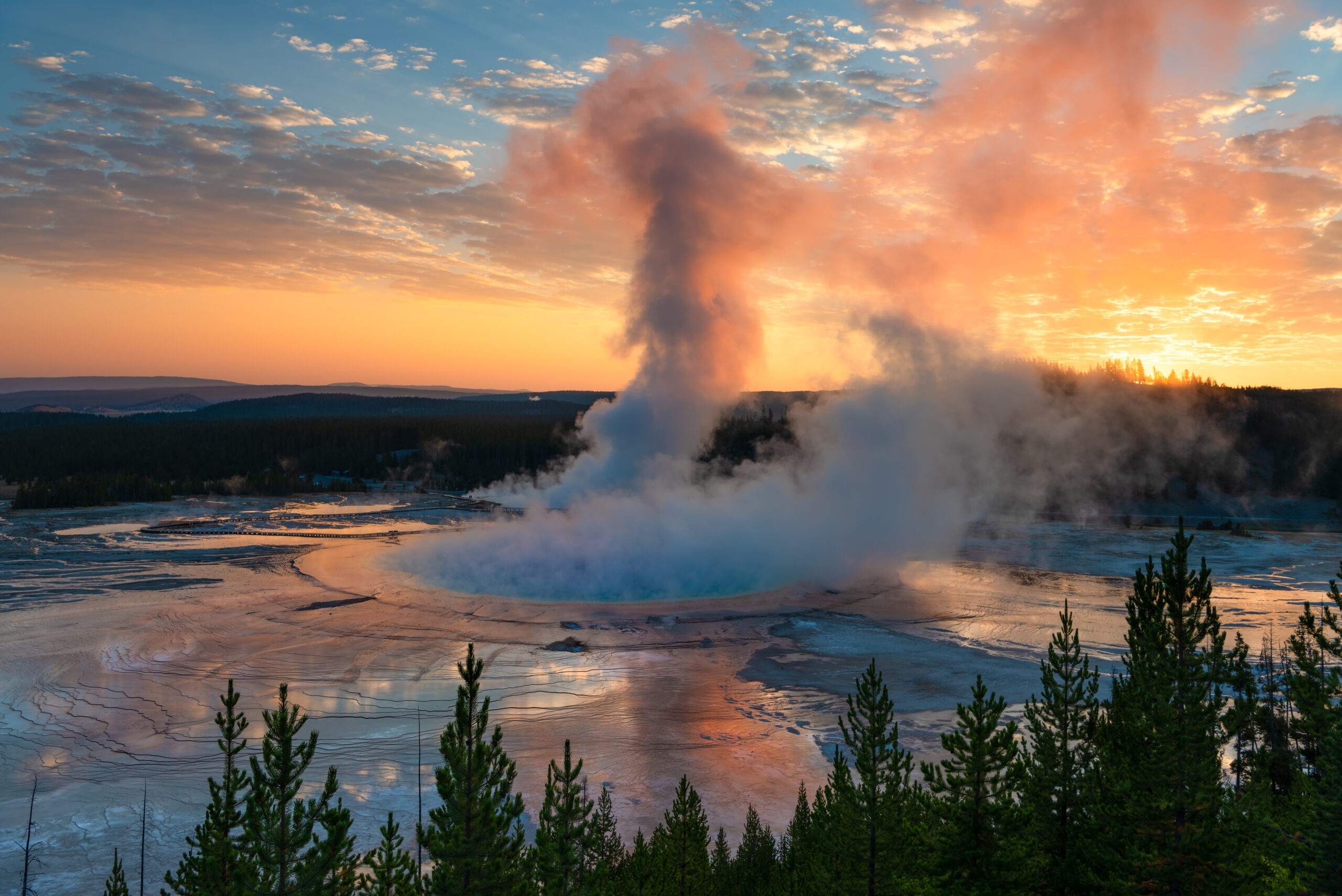
GEYSERS, HOT SPRINGS AND BUBBLING POOLS
Yellowstone contains more than half of the world’s geysers. Old Faithful may be the most famous, but it’s just one of over 500 scattered across the park. Nearby, Castle Geyser blasts a tall, thundering column of water from a cone-shaped formation, while Riverside Geyser shoots diagonally over the Firehole River, creating a postcard-worthy spray. Each geyser has its own rhythm , with some erupting like clockwork and others lying dormant for years before suddenly springing to life.
Hot springs are equally mesmerizing. Grand Prismatic Spring is the largest in the United States and known for its dazzling rainbow rings of color. The colors are caused by heat-loving microbes that thrive in water too hot to sustain most lifeforms.
A LANDSCAPE IN MOTION
Beneath Yellowstone , the land never truly rests. The park experiences 1,500 to 2,500 earthquakes each year, though most are too small to be felt. These tremors help release underground pressure and give geologists insight into the movement of the magma chamber below.
The ground also shifts slowly over time. As magma feeds into the chamber located roughly four to six miles beneath Yellowstone, the ground above begins to rise. When that magma cools and starts to solidify, the surface gradually sinks back down. This vertical motion is another sign of the dynamic forces at work, constantly reshaping the landscape even if the changes aren’t always visible to the human eye.
Shaped by Ice and Time
Yellowstone’s rocky history goes far beyond its recent eruptions. The northern part of the park, near Mammoth Hot Springs , features ancient limestone terraces created by mineral-rich hot water bubbling up through rock laid down in prehistoric seas. The colorful terraces at Palette Spring and Canary Spring continue to grow and change with each passing year.
Glaciers also played a major role in shaping the landscape. During the last ice age, massive sheets of ice moved across the region, carving deep valleys, smoothing rugged ridges and leaving behind layers of rich soil . In places like Lamar Valley , you can still see U-shaped valleys and giant boulders dropped in place as the ice melted. The combination of glacial movement and volcanic activity gives Yellowstone its strikingly varied terrain.
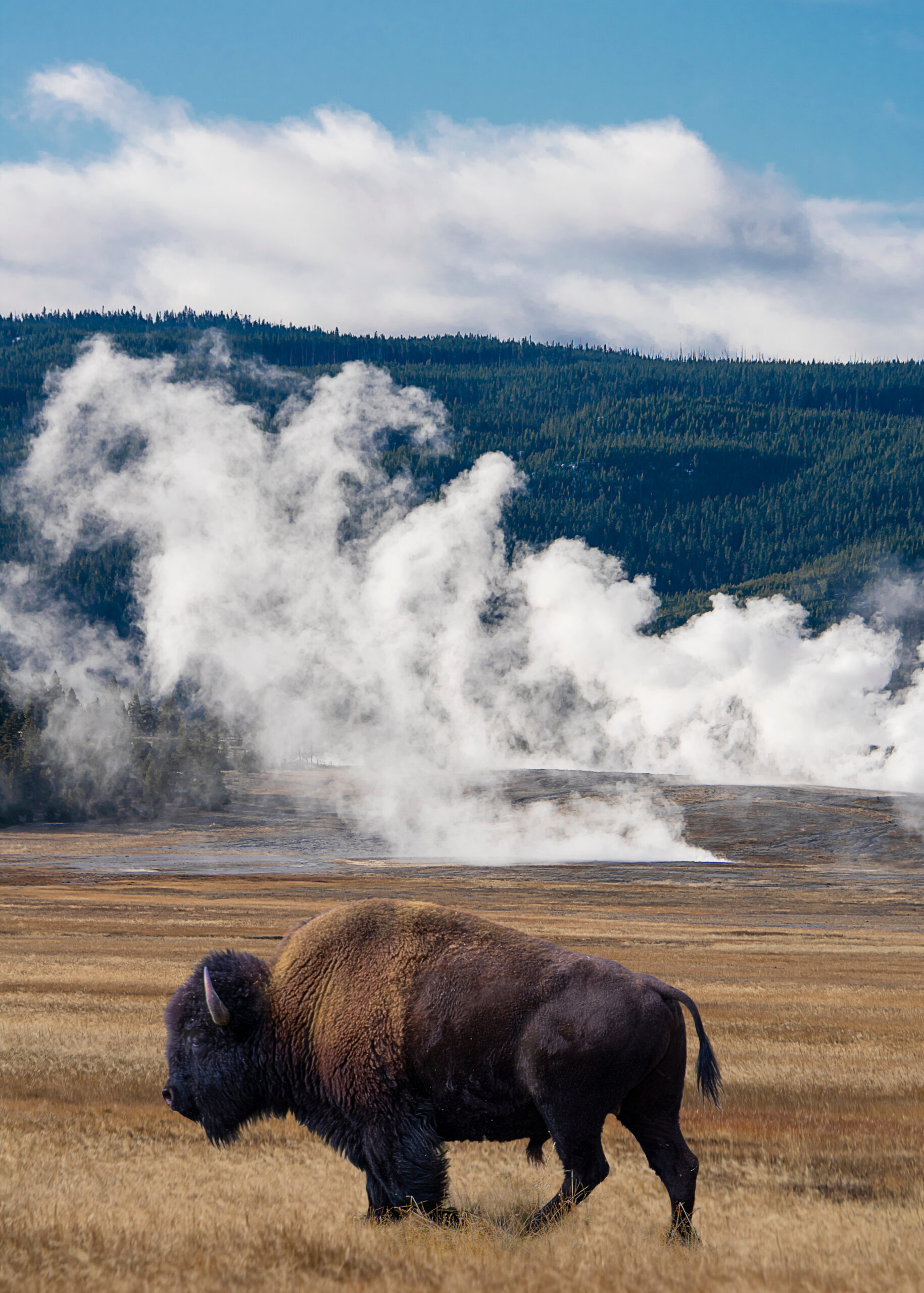
Yellowstone offers a rare glimpse into the natural forces that continue to shape the land. From geysers to glacial valleys, its landscape reflects a long and active past that’s still unfolding today.
Cindy Forlenzo
Realtor

680 S Main St
Chesire, CT 06410
203-910-4844
cindy.forlenzo@cbmoves.com
https://www.coldwellbankerhomes.com/austin-houston
RES.0811301
I’d love to hear from you! Feel free to send me a message.
Cindy Forlenzo
Realtor